The Power of Coaching in Self-Managing Organizations

Employees in self-managing organizations obviously don't have managers, but that doesn't mean there isn't somebody there to support them. Many of these organizations rely on coaches to empower and guide their employees. However, not all organizations follow this path.
Why coaching matters
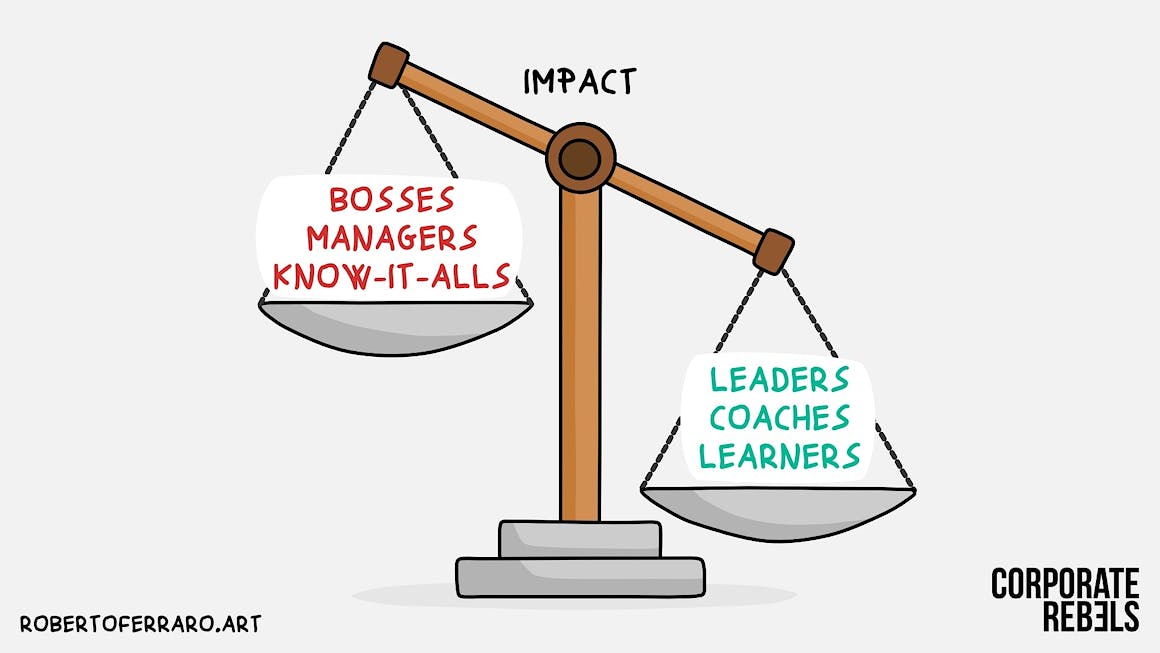
I once asked Jos De Blok, the founder of Buurtzorg, why they had only 30 coaches for over 10,000 employees. His response was simple: "so they won't start acting like managers."
While Buurtzorg thrives with this approach, other self-managing organizations have different strategies.
At Happy, we believe in providing every individual with a coach for support and growth.
One of my colleagues, Sal, explains the benefits: "My coaching sessions help boost my confidence. I set clear and achievable objectives and goals for our coaching sessions. It helps me own them and be accountable for taking specific actions and measuring the progress. I also get better at problem-solving during my coaching as I get support and assistance with reaching my objectives. I am not told how to do it or what to do; rather, I come up with a solution through coaching.”
Rebecca, another colleague, adds, "For me, coaching is an opportunity to reflect on what I am doing and what I can do better. It’s an opportunity to fully follow a thread of thought to the end, which I would otherwise be unable to do without that forum. Also, it’s a great way for me to focus on delivering what I said I would - keeps me honest 😊.”
Lydia, an ex-colleague, sums it up: "I love my sessions with Cathy. I always leave my one-to-ones more excited and inspired than when I went in.”
What makes a great coach
Google did an interesting project called Project Oxygen, aimed at identifying the most important behaviors of managers.
Being Google, they looked at the data and analyzed tens of thousands of performance reviews to work out which managers enabled the best performance for their people.
They identified eight key behaviors and ranked them. These are the top 3:
- Be a Good Coach
- Empower, don’t micromanage
- Express interest in your people
These are very definitely based on people, and coaching is at the top.
So what makes a great coach? I have asked lots of people what they got from their coach, and generally, they say:
- They built my confidence
- They listened
- They asked lots of questions
- They helped me find my own solution
This is very different from mentoring, where people do share the benefit of their own experience. In coaching, it is about listening and asking those questions that help people find their own answers.

Real-life insights
Mayden is a self-managing company based in Bath. There, Taryn Burden explains:
“As someone who is coached, I appreciate the space to step away from the day-to-day or a specific situation and to have conversations with my coach. These conversations are unbiased, open and allow me more to explore my personal development, challenges, and stresses in a safe space. To explore, expand, and challenge my thinking and discover well-thought-through, more holistic thinking, actions, and plans.
As a coach, I feel honored and energized by the opportunity I get to support my clients on their journey, whether personal or professional. Coming alongside them as they navigate sticking points, problem-solving, and personal and professional challenges. Watching them awaken to new ideas and thinking as they are given the space and time to unpack the lengths and breadths of any given situation. As humans, our brains never switch off, and we constantly think things through and over, consciously or not. Coaching holds space for those thoughts to be 'let out' and fully explored.”
Beth Tolsen from Reddico, a Kent-based self-managing organization, values coaching for her career growth: “Working with a coach has been an invaluable part of my career progression—I’m a better team member because of it. Sometimes you need to work through your thoughts aloud with another person to guide you; sometimes you need time to reflect instead of just jumping from task to task. Coaching gives me the space to do that, and I value the opportunity to hear another perspective.”
Coaching at all levels
Coaches can be part of a team or come from anywhere within the organization. Jessica Plumtree, again from Reddico, highlights that coaching provides an avenue for connecting with other people:
“For me, coaching acts as a set time for me to talk through anything that’s on my mind in regard to work, with someone who isn’t in my immediate team. This can give me a fresh perspective, motivate me, and help keep me on track for long-term goals like career progression.
“It is also a chance to connect with people in the company I don’t usually have contact with in my day-to-day tasks, whether that’s my coach directly, or people they suggest I talk to for further learning or support. I personally find coaching a hugely valuable part of life at Reddico, and I always look forward to my calls.”
The wider impact
When I ask my audiences who has a personal coach, I generally find that it is the people in leadership positions. But if coaches can help those in leadership, they should surely be able to help those in front-line positions.
For Happy, creating a coaching culture is very much a part of becoming a self-managing organization.


